

Can tolling go Gantryless? The future of free-flow mobility
Next-generation smart roads combine AI, 3D LiDAR and C-V2X to eliminate heavy gantries and streamline tolling operations.
3 reading time
By Javier Rojo, ITS & Tolling Director, Indra
Tolling is undergoing a massive structural shift. The days of physical toll booths, cash cabins and abrupt stops have largely given way to digital highways. Today, road operators face a new challenge: how to expand all-electronic, free-flow tolling without cluttering corridors with heavy overhead structures that drive up civil engineering costs and disrupt traffic during maintenance.
The answer lies in transforming roadside infrastructure from passive steel frames into intelligent, connected and compact edge systems.
How does barrierless free-flow tolling operate?
In modern barrierless tolling, vehicles travel at highway speeds without slowing down. In fractions of a second, integrated roadside technologies detect, classify and register each passage:
- 3D LiDAR: Creates volumetric representations of vehicles to track trajectories and classify them by dimensions, shape, and axle count.
- Artificial Intelligence & Computer Vision: Reads license plates, correlates multi-sensor feeds, and validates passage in real time.
- Integrated Back-Office Platforms: Processes transactions, enforces dynamic pricing business rules, and manages customer billing and interoperability.
What is Indra’s Gantryless and how does it advance road operations?
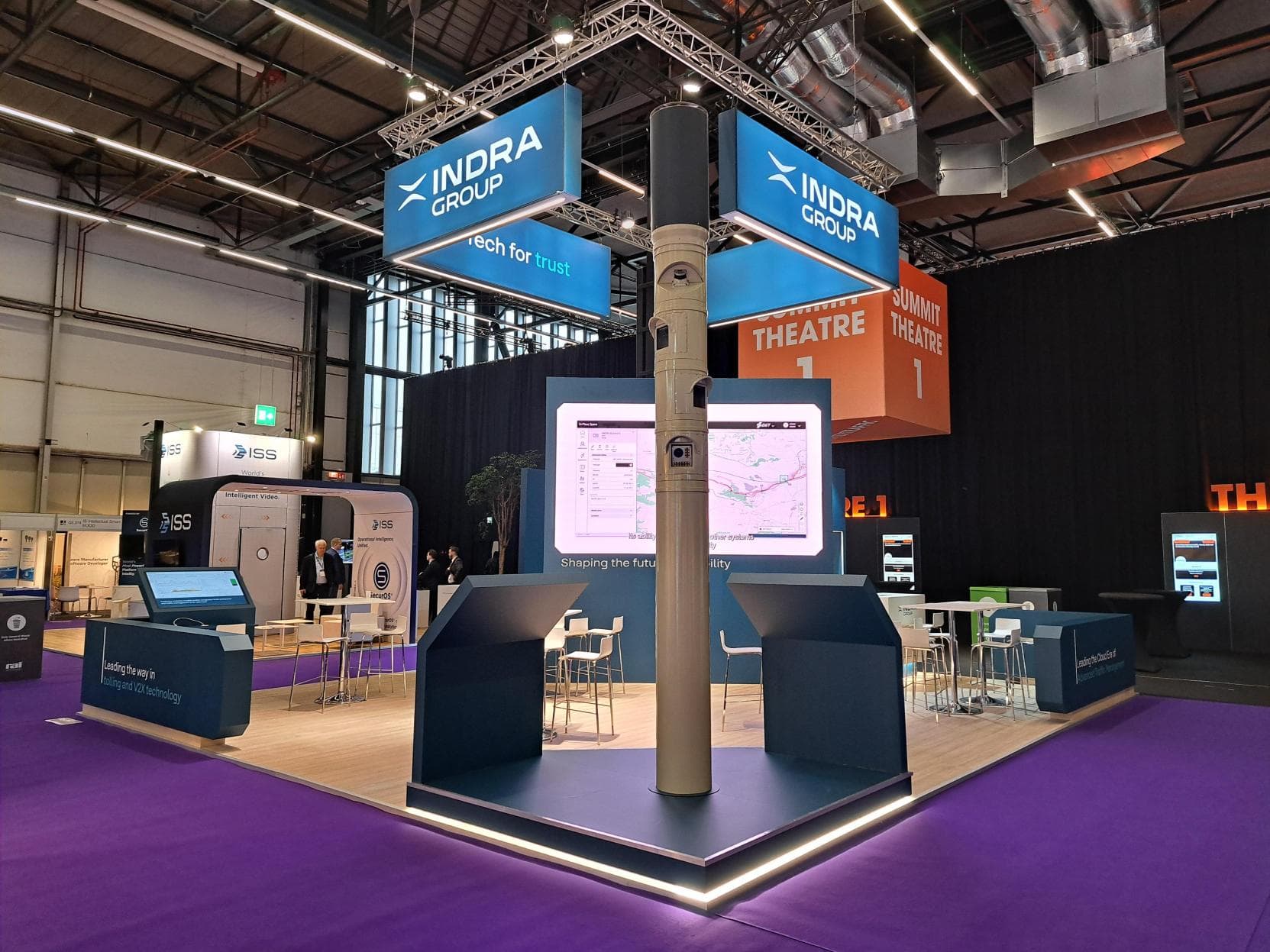
Indra’s Gantryless solution is a 100% free-flow tolling architecture engineered to replace massive overhead gantries with a single, multi-sensor smart pole positioned alongside the highway.
By unifying 3D LiDAR, AI-driven vehicle classification, optical character recognition, and sensor data fusion, Gantryless delivers high-precision detection and classification within an agile, modular footprint. Advantages include:
- Reduced Civil Footprint: Drastically cuts civil engineering, foundation and structural steel costs.
- Safer Maintenance: Roadside placement lets crews service hardware without closing active travel lanes or exposing workers to live traffic.
- Agile Deployment: Adapts seamlessly to diverse geometries, highway ramps and entry/exit points where large gantries are impractical.
- Vehicle-to-Everything (C-V2X) Ready: Leverages Cellular Vehicle-to-Everything connectivity to communicate directly with connected vehicles.
Why turn toll infrastructure into a connected ecosystem?
Beyond payment collection, next-gen roadside poles serve as two-way communications hubs. Through C-V2X, the toll infrastructure can broadcast real-time rates directly to in-vehicle displays, eliminating the need for dedicated toll transponders or tags over time.
Ultimately this dual-use infrastructure enhances highway safety. The same roadside sensors can broadcast instant alerts about wrong-way drivers, unexpected backups or upcoming work zones directly to passing vehicles.
Proven performance across U.S. managed lanes
Indra brings nearly three decades of global tolling experience, with more than 3,300 lanes installed across 20+ countries. Across the United States, Indra technology powers flagship corridors:
- Virginia, I-66 Outside the Beltway: An integrated dynamic tolling and traffic management system awarded the 2024 IBTTA Toll Excellence Award.
- North Carolina, I-485 Express Lanes: The first large-scale deployment of C-V2X tolling technology on a U.S. highway, featuring 3D LiDAR and connected-vehicle communication.
- Northern Virginia: automatic occupancy detection systems on the Express Lanes of the I‑95, I‑495, I-485 and I‑395 highways.
- Texas Corridors: Back-office intelligence supporting critical high-capacity networks like SH-130, NTE and LBJ.
Connect with Indra Group USA at IBTTA 2026
Are you attending the IBTTA 94th Annual Meeting and Exhibition from November 12–15?
Visit Indra Group USA at Exhibit #311 to test our interactive Gantryless touchscreen demo and discover how our next-generation mobility portfolio is shaping American transit.
Tolling is no longer just about collecting revenue; it has become an integrated digital backbone for intelligent highway operations. By replacing heavy steel gantries with multi-sensor smart poles, transportation agencies can protect corridor safety, control capital costs and future-proof roadways for connected vehicles.